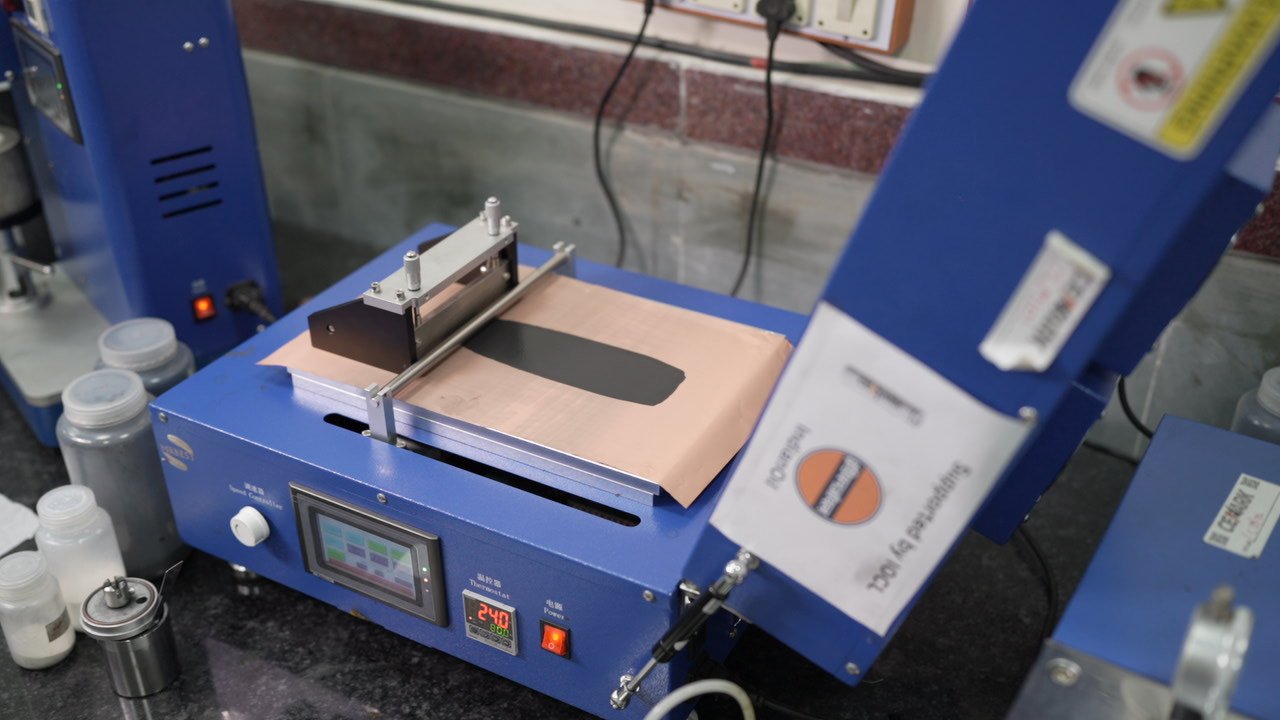
 01
01Silicon Alloy Feedstock
Accessible silicon-alloy input selected for scalable processing.
HomeTechnology
A porous silicon–carbon architecture engineered to capture silicon’s huge capacity — without the swelling, cracking and fading that have held it back.
The silicon challenge
Silicon can hold far more lithium than graphite — but it swells dramatically as it charges. Left unmanaged, that movement fractures particles, breaks conductive pathways and makes performance fade fast.
Conventional silicon
Cracks & loses contactVolume change shatters particles cycle after cycle.
PoroSil™ particle
Expands into its own poresInternal space absorbs swelling — the particle stays intact.
How PoroSil™ works
Cellark’s proprietary route turns ordinary silicon into a structured composite that is built to survive repeated charge and discharge.
Selective processing forms a porous, micron-scale silicon structure. The pores give each particle built-in room to accommodate lithiation-driven expansion — so it swells inward instead of cracking.
Cellark’s proprietary surface treatment is designed to limit unwanted side reactions with the electrolyte and preserve particle integrity over many cycles.
A carbon-coated composite architecture keeps electrons flowing between particles, maintaining reliable particle-to-particle conductivity through repeated charge and discharge.
Reported performance
PoroSil™ raises usable anode capacity while staying compatible with established lithium-ion manufacturing — even a modest blend makes a measurable difference.
Illustrative calculation — not cell-test data. Assumes 10 wt% PoroSil™ at 1,350 mAh/g and $25/kg; graphite at 350 mAh/g and $8/kg; NMC cathode at 200 mAh/g and $25/kg; 3.7 V nominal voltage and 1.1 N/P ratio. Actual results depend on cell chemistry, design and operating conditions.
Technical snapshot
Start with the public product snapshot, then work directly with Cellark on grade selection, electrode recipes and validation conditions.
Request Technical DataManufacturing
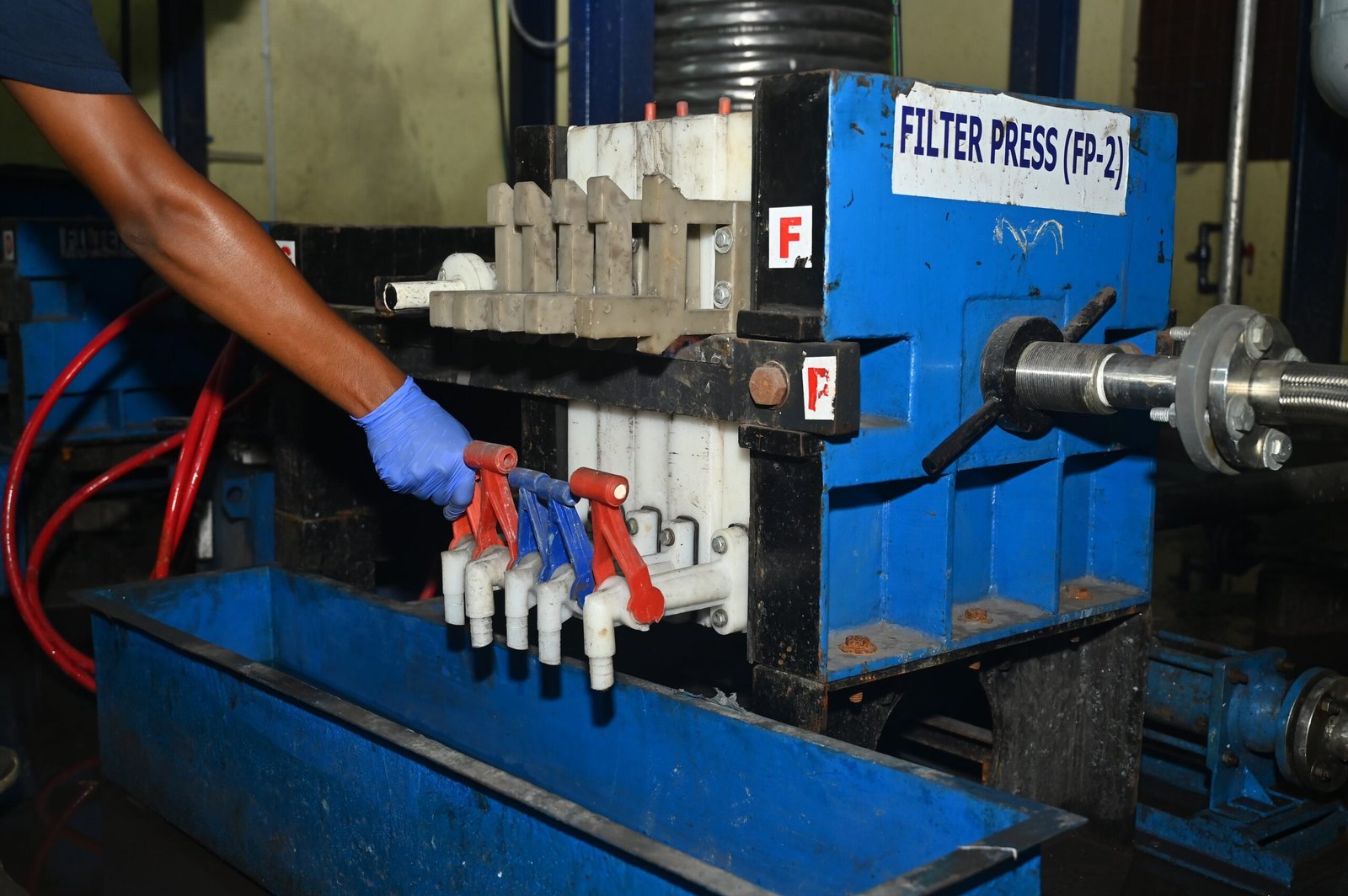
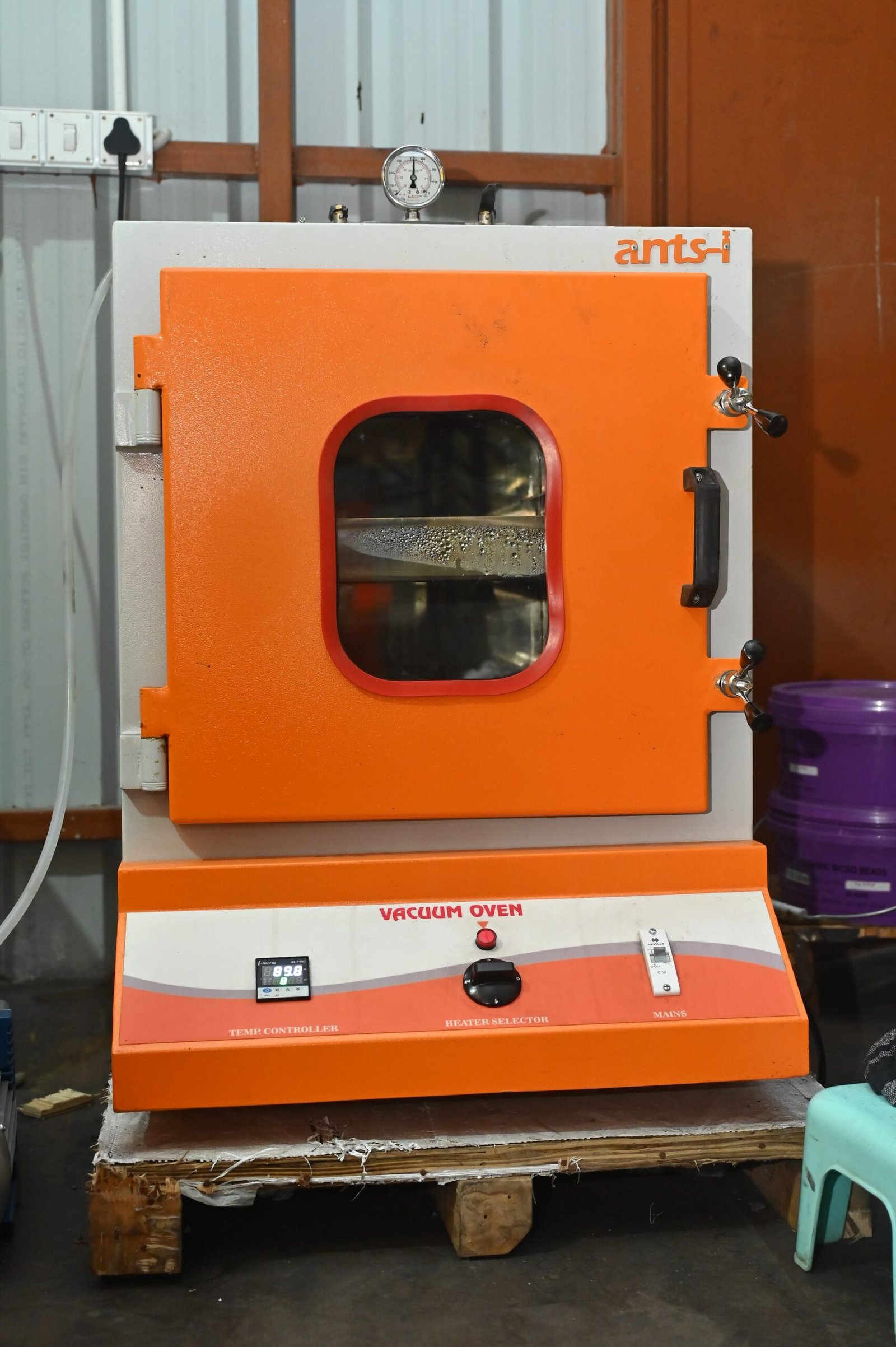
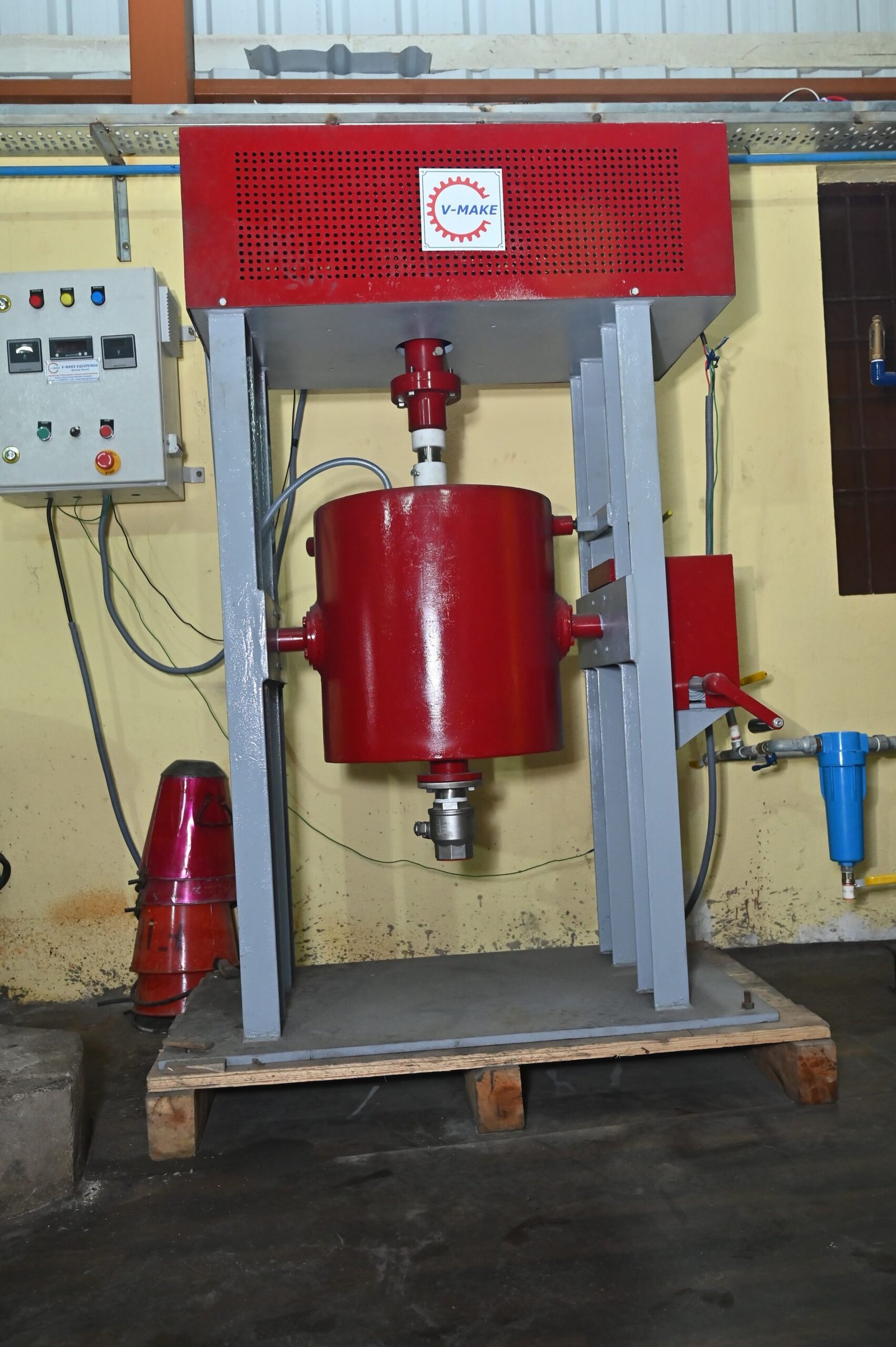
Our process begins with accessible silicon-alloy feedstock and uses a proprietary route to form, stabilise and integrate porous silicon with carbon.
01Accessible silicon-alloy input selected for scalable processing.
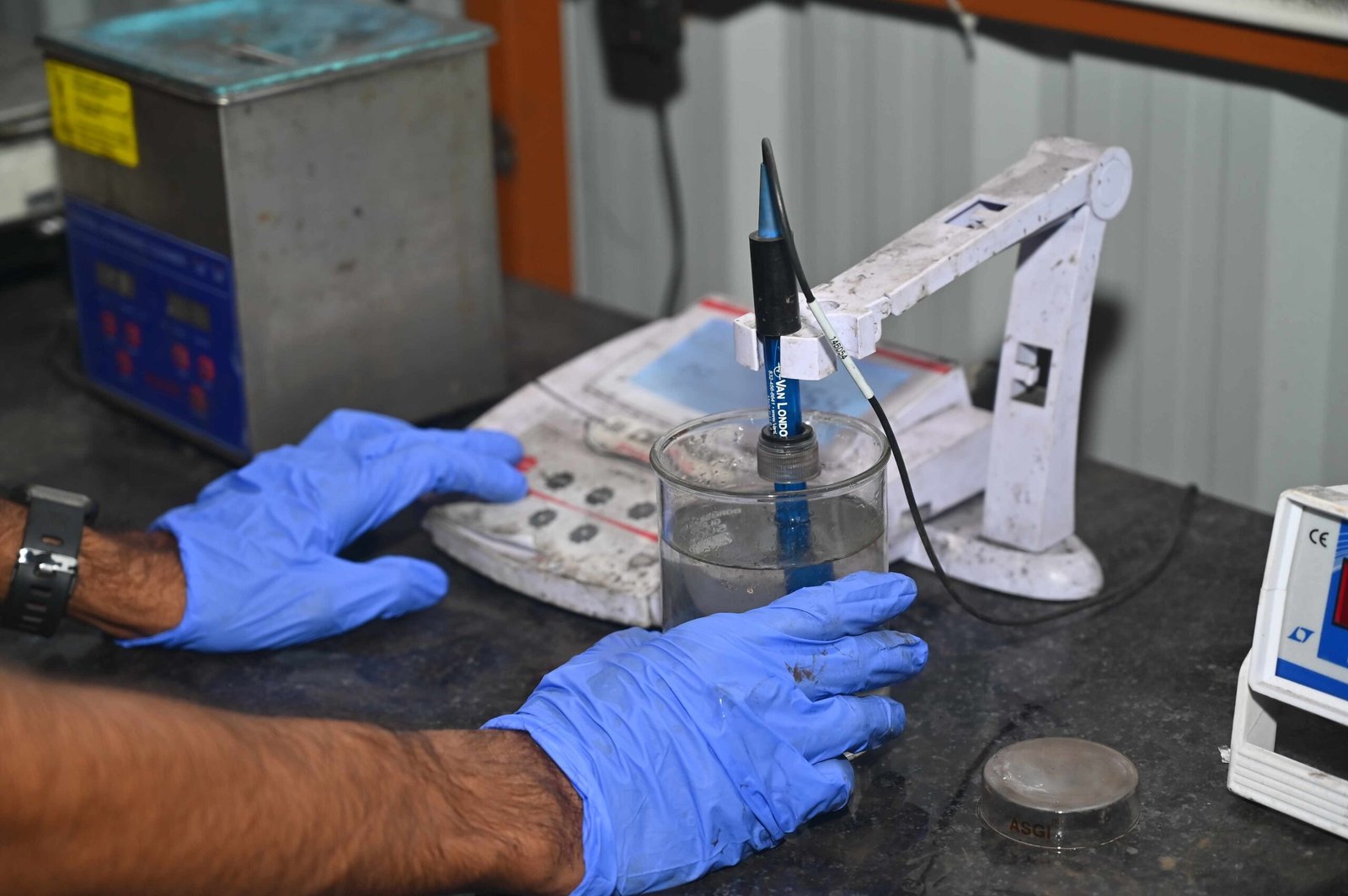
 02
02Controlled removal forms the porous silicon architecture.
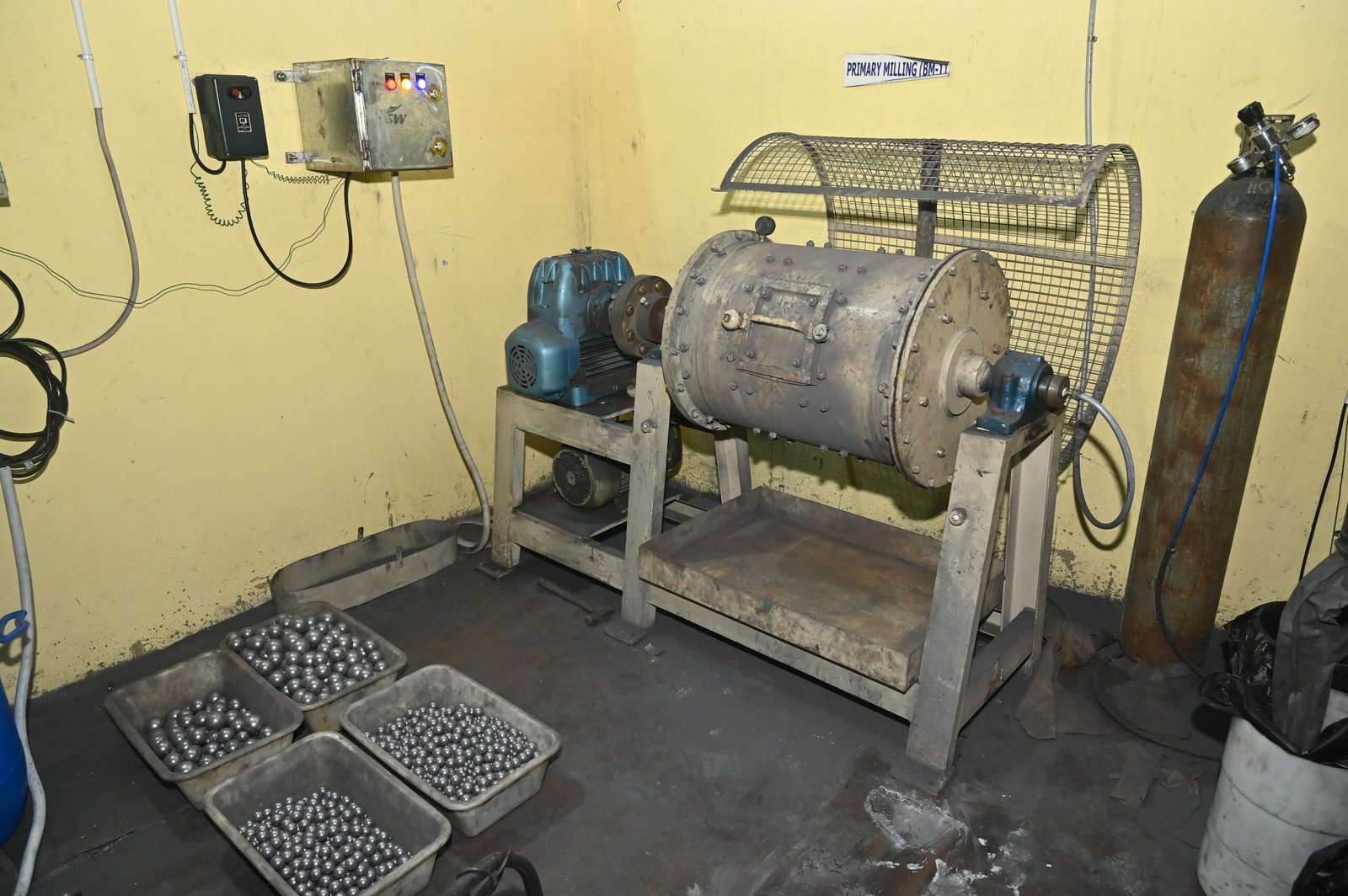
 03
03Proprietary conditioning prepares silicon for battery use.
 04
04Composite formation supports conductivity and cycling.
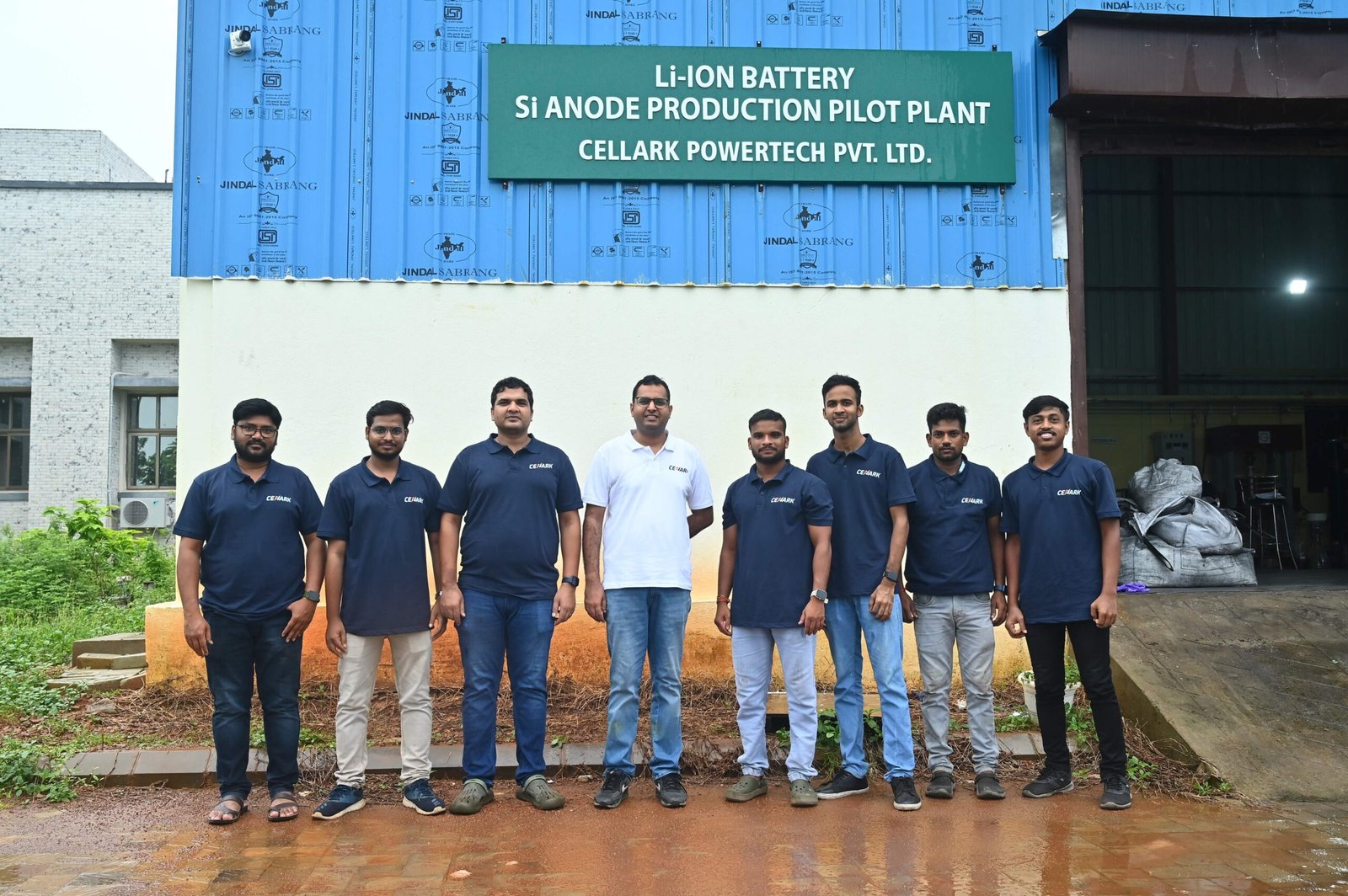
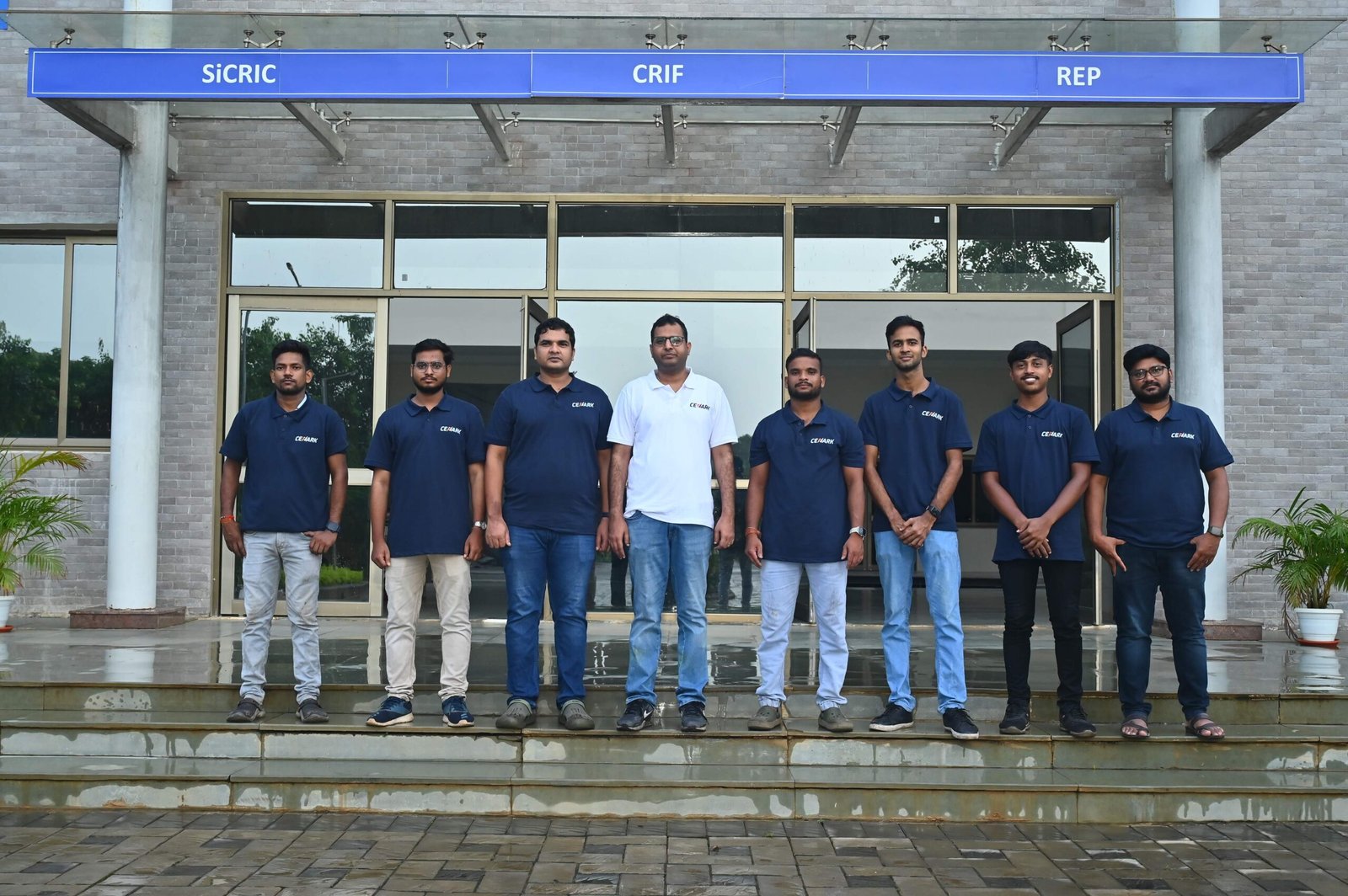
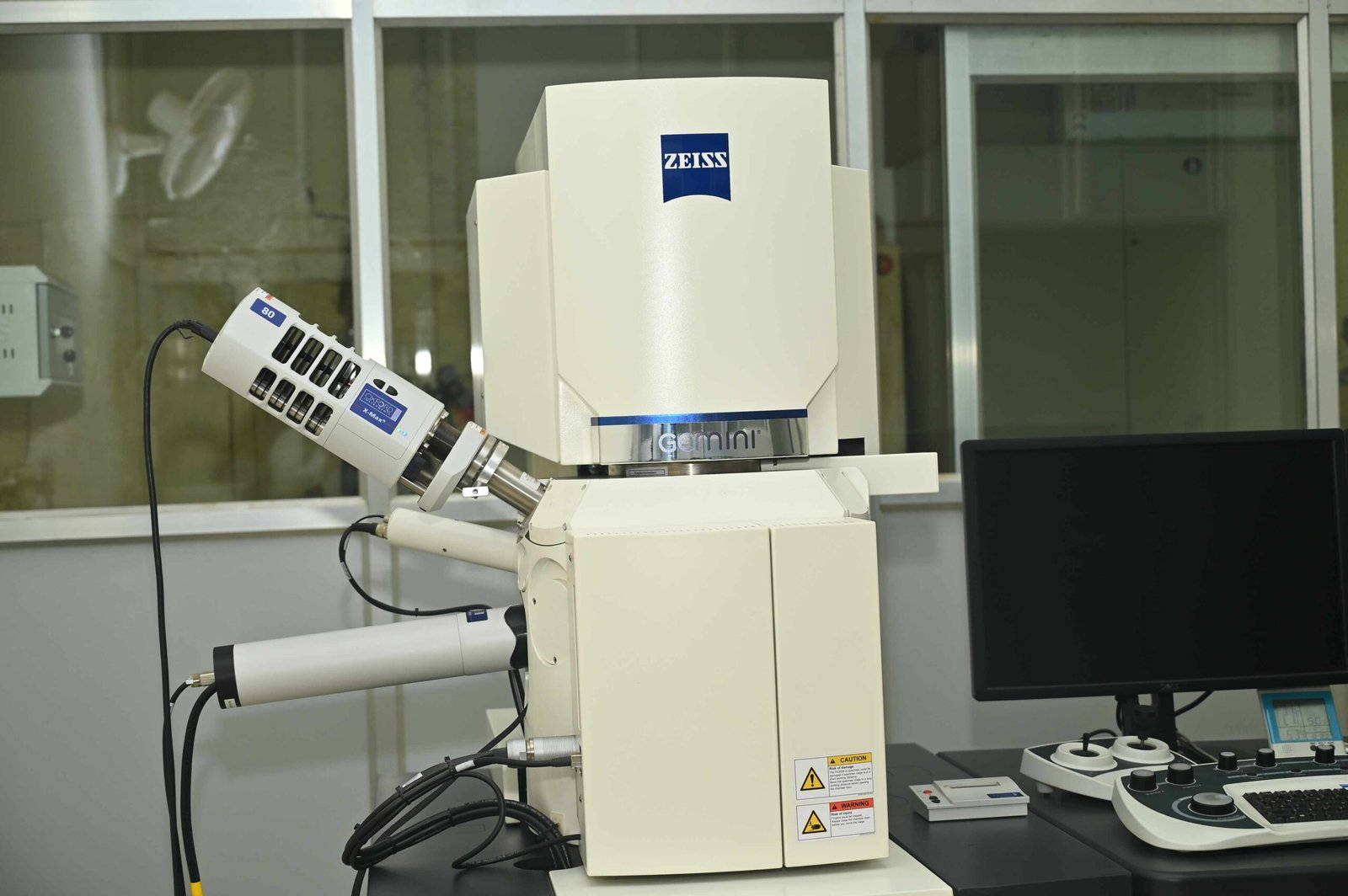
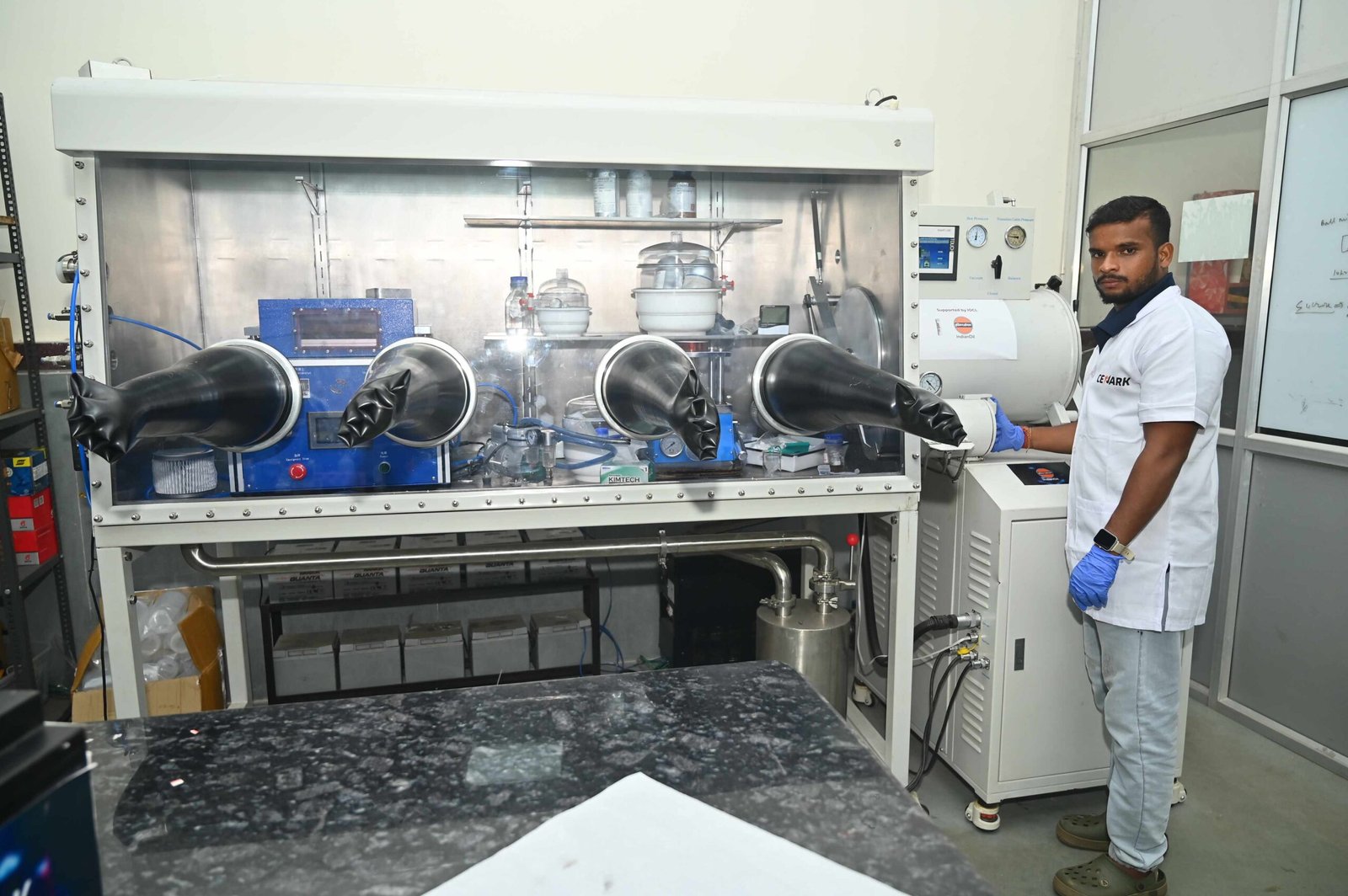
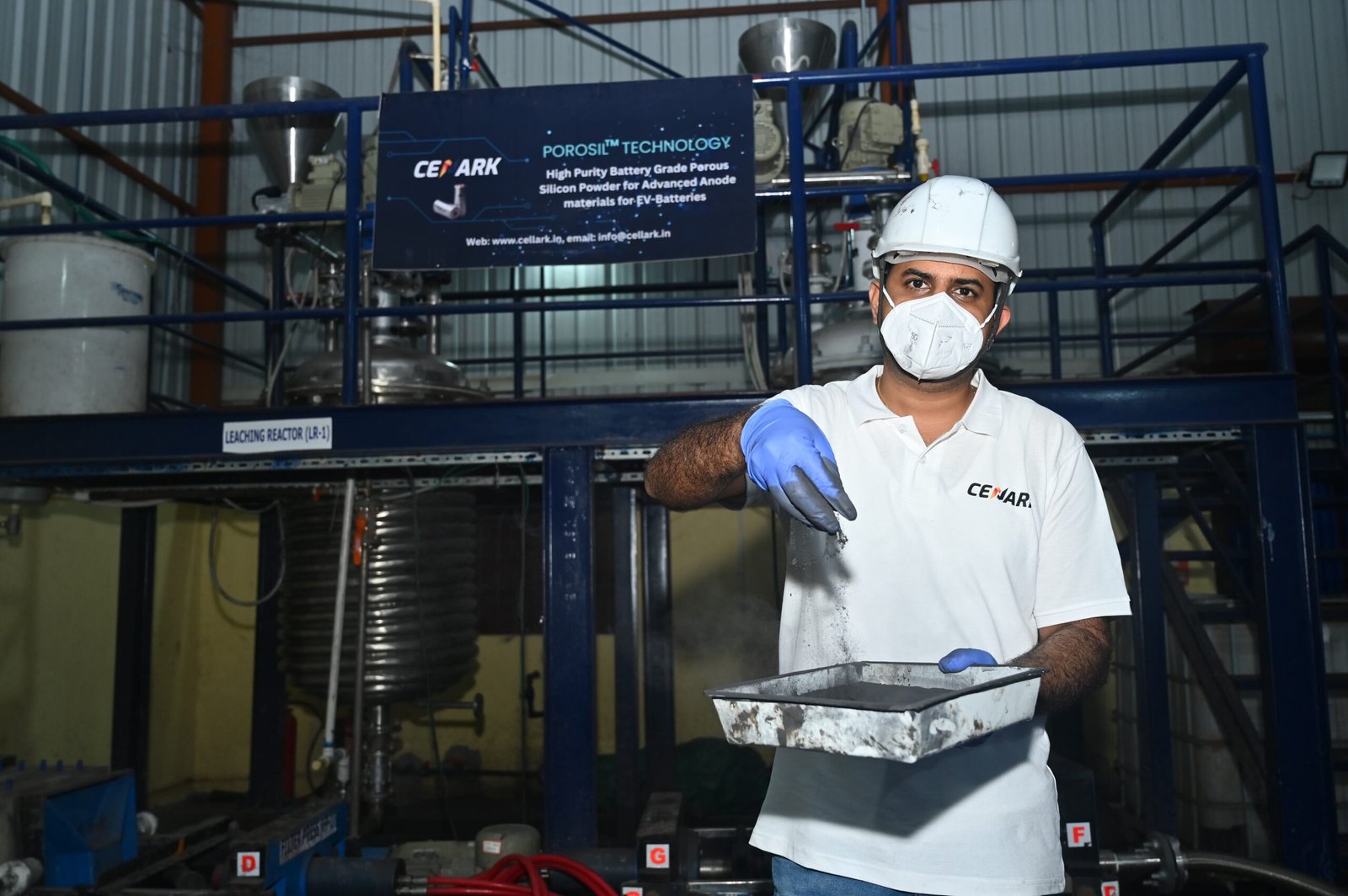
Pilot plant & R&D lab
From advanced characterisation to cell assembly, our in-house facilities take PoroSil™ from lab-scale science to pilot-scale material for qualified partners.